Our book:
-
Join 469 other subscribers
Keywords
23andMe analysis of competing hypotheses artificial intelligence BCG Matrix Betts Big data black swan Cassandras China CIA clayton christensen competitive intelligence Constructing cassandra crafting strategy Cuban Missile Crisis culture decision making demography disruption diversity economics energy entrepreneurship Ernest R May Forbes Forecast forecasting geopolitical alpha Geopolitics Geostrategy Global Trends 2030 Graham T. Allison grand strategy Hedge funds identity Integrated Strategy intelligence Intelligence Analysis Intelligence failure investing Kodak leadership Nassim taleb National Intelligence Council non-linearity non-market strategy non-predictive strategy nonlinear systems non market forces organizational decline Osama bin Laden Peter F. Drucker Porter's Five Forces prediction Richard E Neustadt Richard Neustadt Risk Sam Walton scenario planning Sherman Kent Social construction strategic autism strategic surprise strategy strategy making surprise Tactics technology Tetlock uncertainty Use of analogs Use of history USSR Value Chain Analysis videoFollow us on Twitter
Tweets by silberzahnjonesArchives
Silberzahn Jones
Category Archives: Our work featured
Milo Jone’s TEDx talk on artificial intelligence and leadership
Posted in Our work featured
Tagged artificial intelligence, IE business school, leadership, TEDx
Our new piece in the FT: Data weddings not data wars – On the future of work & AI
Our new piece in the FT is called “Data weddings not data wars”. It discusses the future of work in a wold of AI. Read it here.
Posted in Our work featured
Tagged artificial intelligence, centaur, FT, future of work, HR
Our New Forbes Piece: The Cargo Cult of Digital Transformation
Our latest post on Forbes is a reflection on difficulty of transformation by incumbent companies in the face of digital disruption. It’s available here.
Posted in Our work featured
Tagged cargo cult, digital transformation, disruption, Forbes, innovation
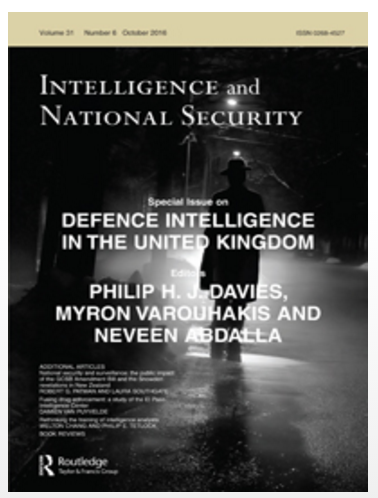
Review of Constructing Cassandra in Intelligence and National Security
Constructing Cassandra was reviewed in the Intelligence and National Security, regarded as the world’s leading scholarly journal focused on the role of intelligence and military affairs in international relations.
You can retrieve the review here.
Our new Forbes piece: Without An Opinion, You’re Just Another Person With Data
Our new Forbes piece is a take on W. Edwards Deming’s words: “Without data you’re just a person with an opinion.” In fact, in a big data world, it might just be the opposite: without an opinion, you’re just a person with data. Read it here.
Geopolitics in Japan and Harvard Business Review, Korea
On March 21, Milo will offer an IE Masterclass on “Geopolitics for Business” in Tokyo. The following day, he will be speaking on the same topic at Nissan’s Global Headquarters and in a Nikkei Open Seminar. Please contact him if you would like to attend one of these sessions.
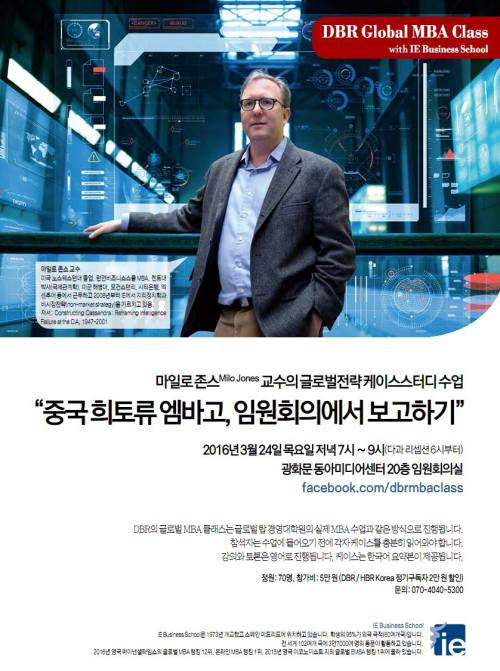
In Seoul on March 24, Milo will offer a session on the promise and pitfalls of Big Data at Ernst & Young. That session will be followed in the evening by a special, two-part Masterclass for Harvard Business Review Korea (Donga Business Review) entitled “Intelligence Tools for the Business Professional”. In this session, Milo will explore how businesses can use analytic tools drawn from the Intelligence Community to understand incidents like the de facto 2010 Chinese embargo on the export of rare earth elements. Please note that this event hosted by DBR on a fee basis; if you are interested in attending, please register here.
The content of all of these sessions will be covered in much greater depth in Madrid in June, when Milo is co-teaching the three-day IE Executive Education course “Unconventional Edges in Finance: Tools from Intelligence Agencies, Behavioral Finance, and Scenario Strategy.” Details about the course and how to register for it can be found here.

Posted in Event, Methodology & Tools, Our work featured
Tagged Big data, geopolitical alpha, Geopolitics, Intelligence Analysis
Our new Forbes piece: Avoid Nasty Surprises: Three Models To Integrate Country Behavior To Your Strategy
Our latest post on Forbes is a reflection on the limits of explaining state behavior with reason and rationality. An obsession with finding rational explanations – however far-fetched – for a state’s actions may lead us to ignore important emotional motivations, and result in miscalculation or outright surprise. Read our piece here.
Posted in Our work featured
Tagged decision making, Forbes, Graham Allison, rational actor model, state behavior
Our new Forbes piece: Chess, Centaurs and Your Future as an Investor in An Age of Machine Intelligence
Our new Forbes article is a reflection on the impact of artificial intelligence and machine reading on investing. Machine reading and artificial intelligence is becoming a fact of life in finance. As an investor, will you be a victim or will you take advantage of it? The article is available here.
Posted in Our work featured
Our new Forbes piece: Are You Near Your Altamont Moment? How Catastrophic Surprises Transform Business Identities
Our latest post on Forbes is a reflection on the role of catastrophic events in the transformation of people and organizations’ identities, based on the example of the ill-fated Rolling Stones’ Altamont festival in 1969. It is available here.
Posted in Our work featured
Tagged Altamont festival, Cosmology event, Forbes, Rolling Stones, strategic surprise
Constructing Cassandra in Time magazine
Yesterday the article “The CIA’s Latest Mission: Improving Diversity” appeared in Time magazine. I was interviewed for the story, so it is gratifying to see that Constructing Cassandra is cited. Nevertheless, it is a pity that Maya Rhodan, the author of the Time piece, did not explore more fully the link between diversity and effective analysis.
As I stressed to Ms Rhodan and as our book documents, diversity is a practical, not merely a moral issue for intelligence agencies (and for any organization charged with wide-ranging risk analysis). Racial, ethnic, religious and gender diversity is far from a perfect proxy for cognitive diversity, but homogeneity in these categories assuredly contributes to the “natural selection of accidents” that produces intelligence failures.